



Parasite
Antiparasitics are a class of medications which are indicated for the treatment of parasitic diseases such as nematodes, cestodes, trematodes, and infectious protozoa.
Parasite Isoform Specific Products
All Product Categories
-
Parasite Related Products (2504)
Related Products (2504)

-
Related Compound Screening Libraries (1)
-
Parasite Isoform Comparison
-
HMMNI-d3
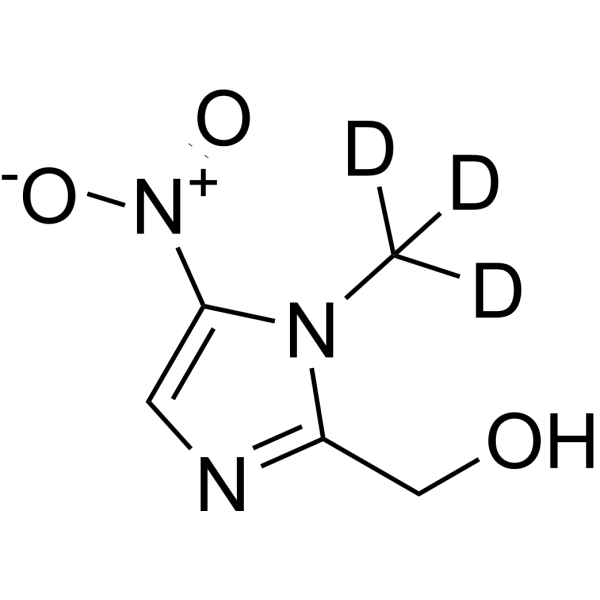 0 ImagesSynonyms: Hydroxy Dimetridazole-d3HMMNI-d3 (Hydroxy Dimetridazole-d3) is deuterium labeled HMMNI (HY-W008216). HMMNI (Hydroxy dimetridazole) is a hydroxy metabolite of Dimetridazol (HY-B1244). Dimetridazole is a nitroimidazole class agent that combats protozoan infections.
-
LL-37 FK-13 TFA
 0 ImagesCat. No.: HY-P4836APurity: 98.60%LL-37 FK-13 TFA is the TFA salt form of LL-37 FK-13 (HY-P4836). LL-37 FK-13 TFA is an antimicrobial agent, that inhibits Trichomonas vaginalis. LL-37 FK-13 TFA exhibits minimal hemolytic effects on human erythrocytes and low cytotoxicity to human fibroblasts.
-
Pimozide (Standard)
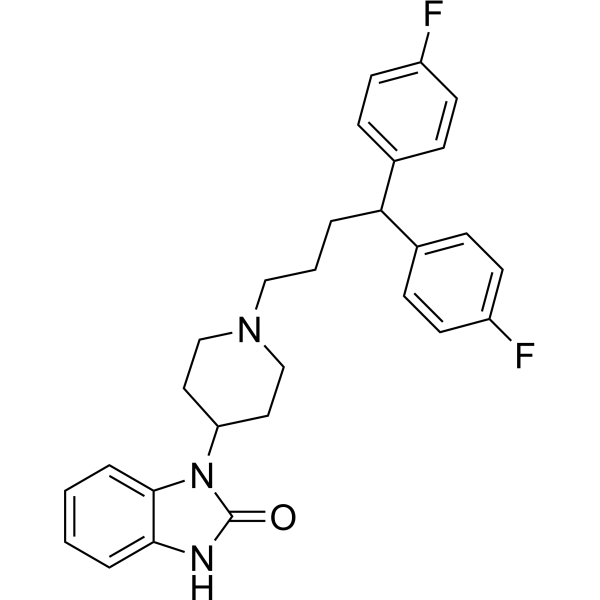 0 ImagesPimozide (Standard) is the analytical standard of Pimozide. This product is intended for research and analytical applications. Pimozide is a dopamine receptor antagonist, with Kis of 1.4 nM, 2.5 nM and 588 nM for dopamine D2, D3 and D1 receptors, respectively, and also has affinity at α1-adrenoceptor, with a Ki of 39 nM; Pimozide also inhibits STAT3 and STAT5.
-
(R)-Praziquantel-d11
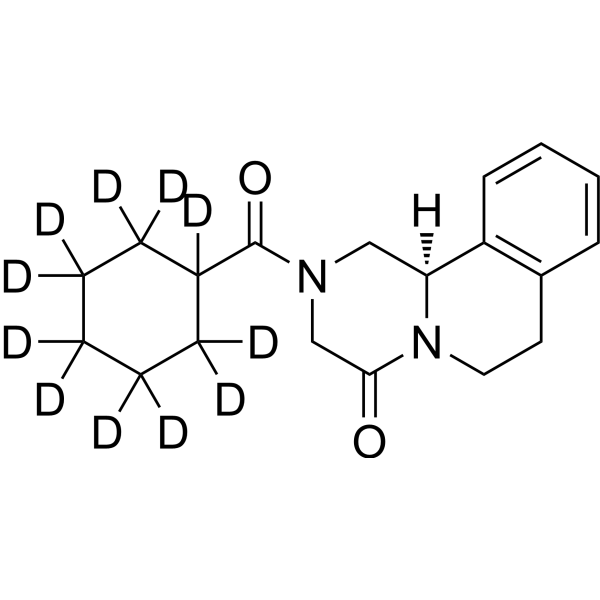 0 Images(R)-Praziquantel-d11 is the deuterium labeled (R)-Praziquantel. (R)-Praziquantel, the active enantiomer of Praziquantel, is a partial agonist of the human 5-HT2B receptor. (R)-Praziquantel acts as an antischistosomal eutomer.
-
Oxamniquine
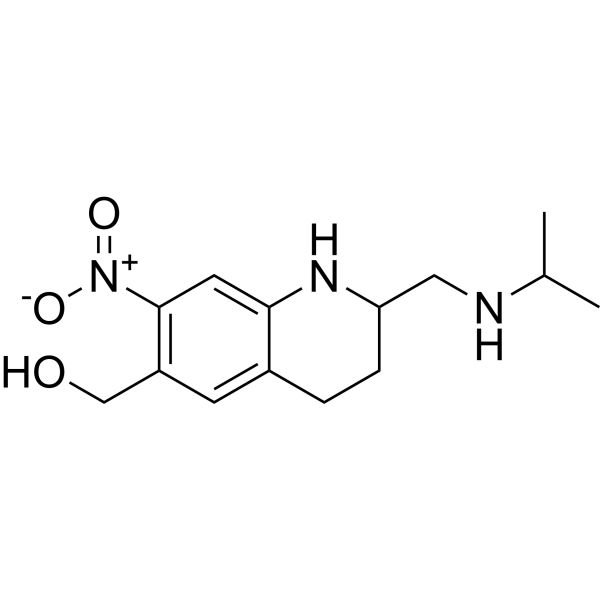 0 ImagesCat. No.: HY-10416CAS No.: 21738-42-1Oxamniquine is a potent agent for the treatment of schistosomiasis.
-
Cruzain-IN-1
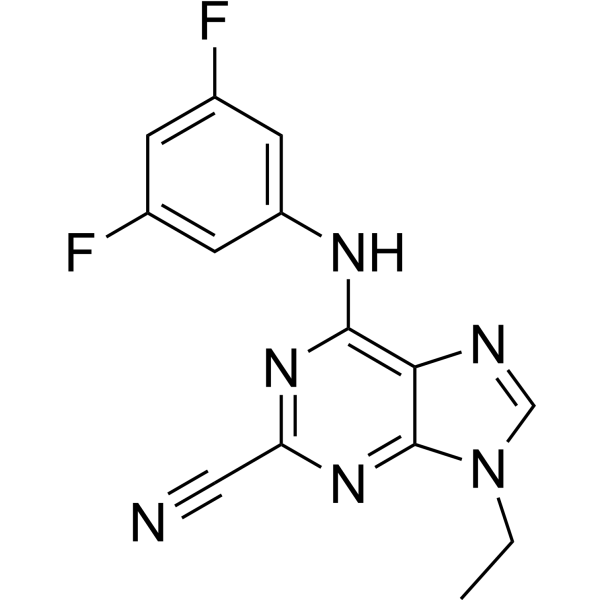 0 ImagesCruzain-IN-1 is a covalent and reversible Cruzain inhibitor, with an IC50 of 10 nM.
-
Chlorphenoxamine
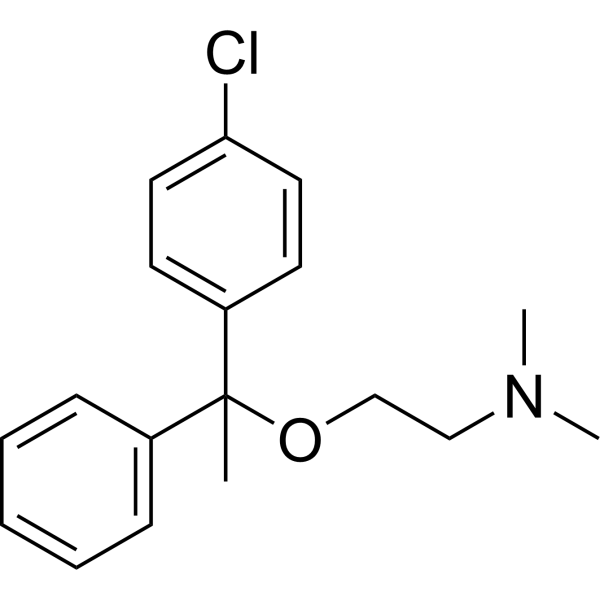 0 ImagesChlorphenoxamine, an antihistamine and anticholinergic agent is a GPCR antagonist. Chlorphenoxamine inhibits multiple lethal viral diseases, such as SARS-CoV, MERS-CoV, EBOV and malaria. Chlorphenoxamine shows anti-filovirus activity against both EBOV and Marburg virus (MARV) with IC50s of 1.1 μM and 6.2 μM, respectively. Chlorphenoxamine is used for allergic conditions, urticaria, viral diseases and Parkinson’s disease.
-
Amodiaquine dihydrochloride dihydrate (Standard)
 0 ImagesSynonyms: Amodiaquin dihydrochloride dihydrate (Standard)Amodiaquine (dihydrochloride dihydrate) (Standard) is the analytical standard of Amodiaquine (dihydrochloride dihydrate). This product is intended for research and analytical applications. Amodiaquine dihydrochloride dihydrate (Amodiaquin dihydrochloride dihydrate), a 4-aminoquinoline class of antimalarial agent, is a potent and orally active histamine N-methyltransferase inhibitor. Amodiaquine dihydrochloride dihydrate is also a Nurr1 agonist and specifically binds to Nurr1-LBD (ligand binding domain) with an EC50 of ~20 μM. Anti-inflammatory effect.
-
Doxycycline-d3 (hyclate) (major)
 0 ImagesCat. No.: HY-N0565S1Doxycycline-d3 hyclate (major) is the deuterium labeled Doxycycline hyclate (HY-N0565B). Doxycycline hyclate is an orally active highly lipophilic, tissue-permeable MMP inhibitor with broad-spectrum antibacterial activity. Doxycycline hyclate is also a semi-synthetic antibiotic with chelating properties, which blocks bacterial protein synthesis and inhibits extracellular matrix degradation through interactions with zinc and calcium atoms. Doxycycline hyclate also inhibits mitochondrial biogenesis, translation, and the expression of respiratory chain proteins. Doxycycline hyclate induces apoptosis, inhibits autophagy and EMT, downregulates stem cell markers, and activates the PI3K-AKT pathway, thereby effectively inhibiting the viability and proliferation of cancer cells such as breast cancer cells. Doxycycline hyclate also promotes the survival and self-renewal of embryonic stem cells and neural stem cells, and reduces the frequency of medium changes in culture. Doxycycline hyclate has been applied in studies related to breast cancer, prostate cancer, bladder cancer, and other cancers.
-
4-Dodecylmorpholine
 0 Images4-Dodecylmorpholine (DMP) is a surfactant with antimalarial activity. It can be used as a hydrophilic enzyme detergent and is commonly used as an extraction collector in reverse foam preparation processes.
-
Phomarin
 0 ImagesPhomarin is an inhibitor for dihydrofolate reductase (DHFR). Phomarin exhibits activity against Plasmodium parasites and fungi including Mycrobotryum violaceum and Botrytis cinerea. Phomarin can be used for the research of malaria and fungal infections.
-
Chalcone 4 hydrate
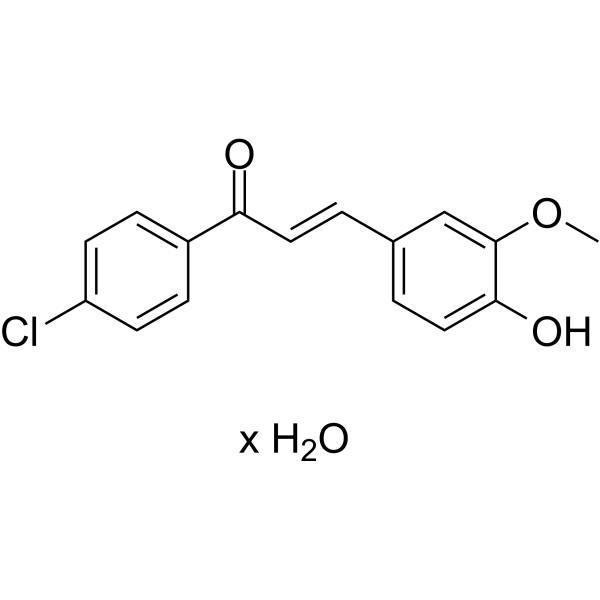 0 ImagesChalcone 4 hydrate is an anti-parasitic agent. Chalcone 4 hydrate inhibits the growth and proliferation of Babesia and Theileria in vitro. Chalcone 4 hydrate reduces the viability of mammalian fibroblasts and kidney cells in vitro. Chalcone 4 hydrate can be used for the research of parasitic infections.
-
PI4Kβ/PKG-IN-2
 0 ImagesPI4Kβ/PKG-IN-2 (Compound 20) is an orally active dual inhibitor of Plasmodium phosphatidylinositol 4-kinase beta (PI4Kβ) and cGMP-dependent protein kinase (PKG). PI4Kβ/PKG-IN-2 has potent inhibitory effects on Plasmodium. PI4Kβ/PKG-IN-2 is promising for research of malaria.
-
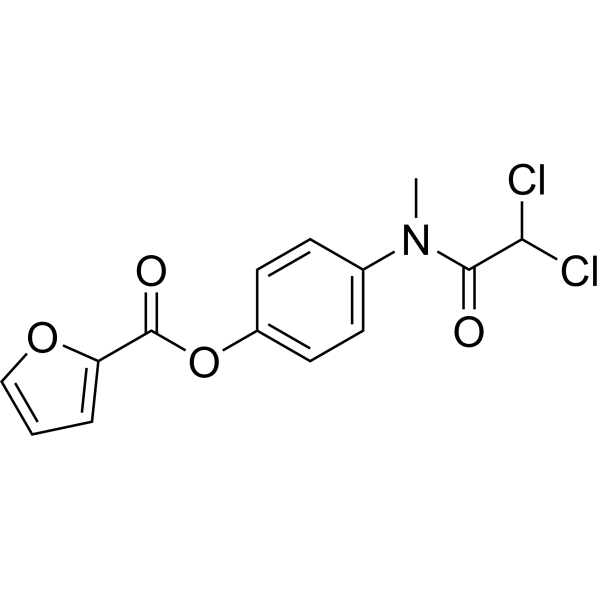
Quinfamide
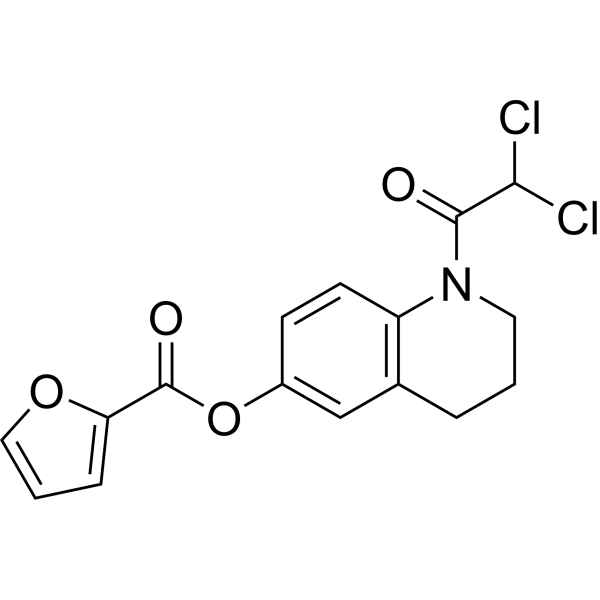 0 ImagesSynonyms: WIN-40014Quinfamide (WIN-40014) is an orally active class of dichloroacetyl derivative with significant anti-intestinal protozoan, particularly mmoeba histolytica activity. Quinfamide exhibits antiamoebic activity under solvent-free conditions with an IC50 of 28.15 μg/mL in a suspension condition. Quinfamide particles are actively engulfed by the amoebas, then cells are affected, and finally, amoebas are killed and lysed, and this process directly relies on the physical intake of the drug particles. Quinfamide can be used in the research of tropical parasitic infections such as amoebiasis and helminthiasis.
-
Eritadenine
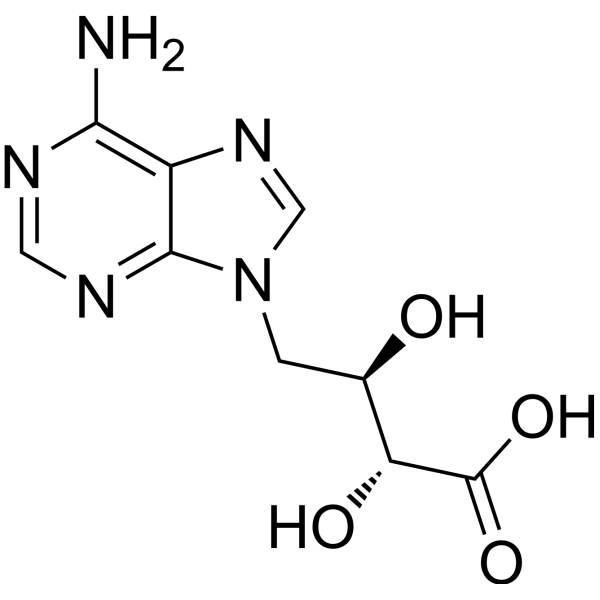 0 ImagesSynonyms: Lentinacin; D-Eritadenine; LentysineEritadenine (D-Eritadenine) is a potent AdoHcyase inhibitor, with an IC50 value of 7 nM. Eritadenine is also an acyclic sugar adenosine analogue. Eritadenine exhibits an inhibitory effect on the growth of Cryptosporidium parvum, with a MIC50 of 3 μM. Eritadenine can be used in the research of colorectal adenocarcinoma.
-
Santonin (Standard)
 0 ImagesSantonin (Standard) is the analytical standard of Santonin. This product is intended for research and analytical applications. Santonin is an active principle of the plant Artemisia cina, which is formely used to treat worms.
-
6-Hydroxyindazole
 0 Images6-Hydroxyindazole is an anti-parasite agent with an EC50 of 128.9 μM against intracellular amastigotes of Leishmania amazonensis. 6-Hydroxyindazole can be used in the research of leishmaniasis.
-
SAR 97276
 0 ImagesSynonyms: Albitiazolium bromideSAR 97276 (Albitiazolium bromide) is an antimalarial agent. SAR 97276 interfers with the phospholipid metabolism of malarial parasites, especially the biosynthesis of phosphatidylcholine (PC). SAR 97276 enters erythrocytes through the new permeability pathways (NPP) of infected erythrocytes, and is transported into the malarial parasite by a poly-specific cation carrier.



